George's Theater Door: Where Luxury Meets Acoustic Excellence
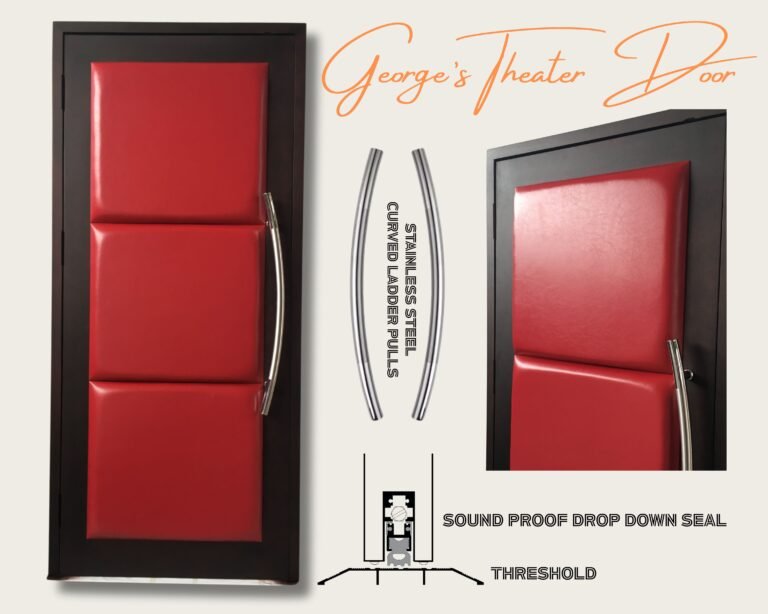
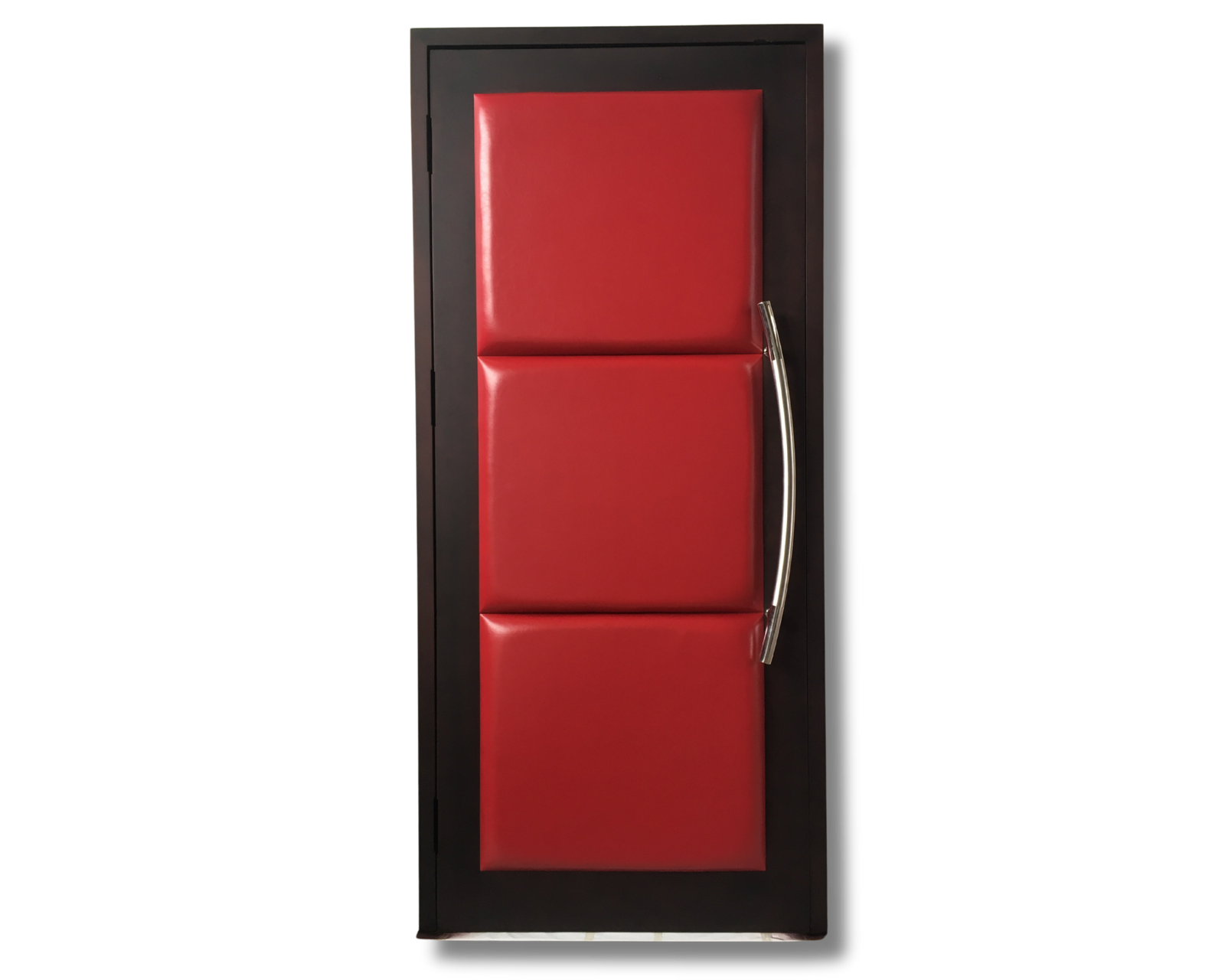
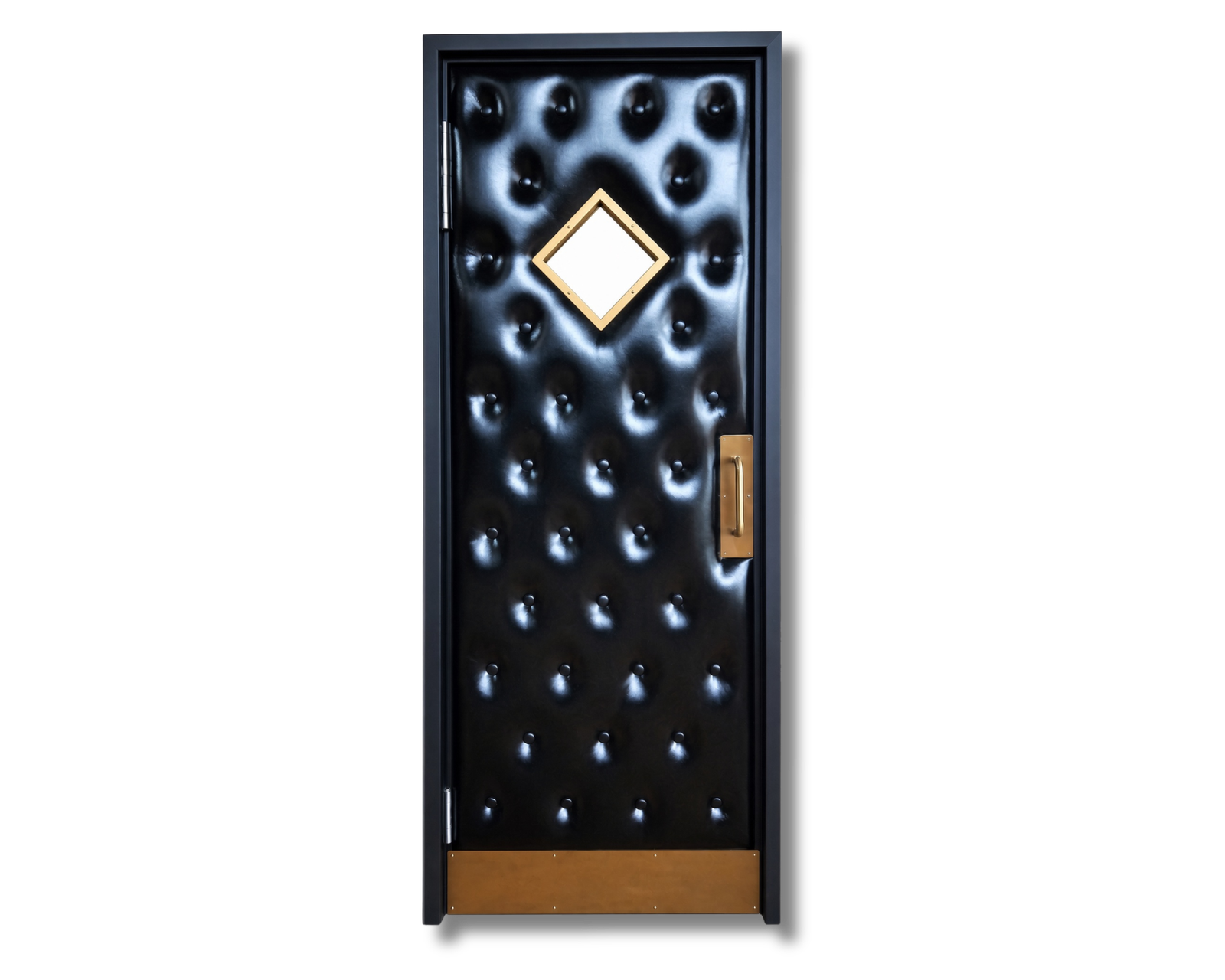
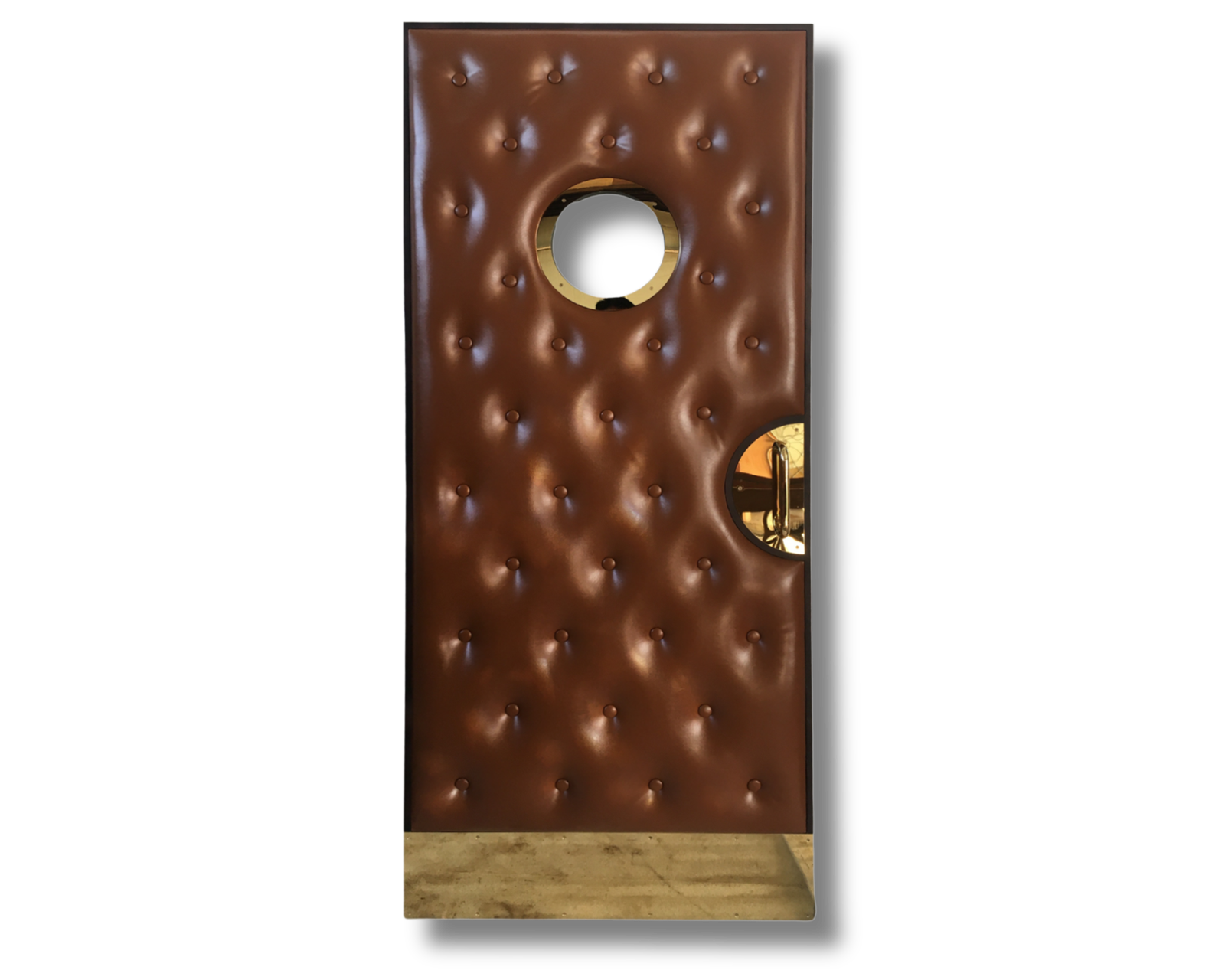
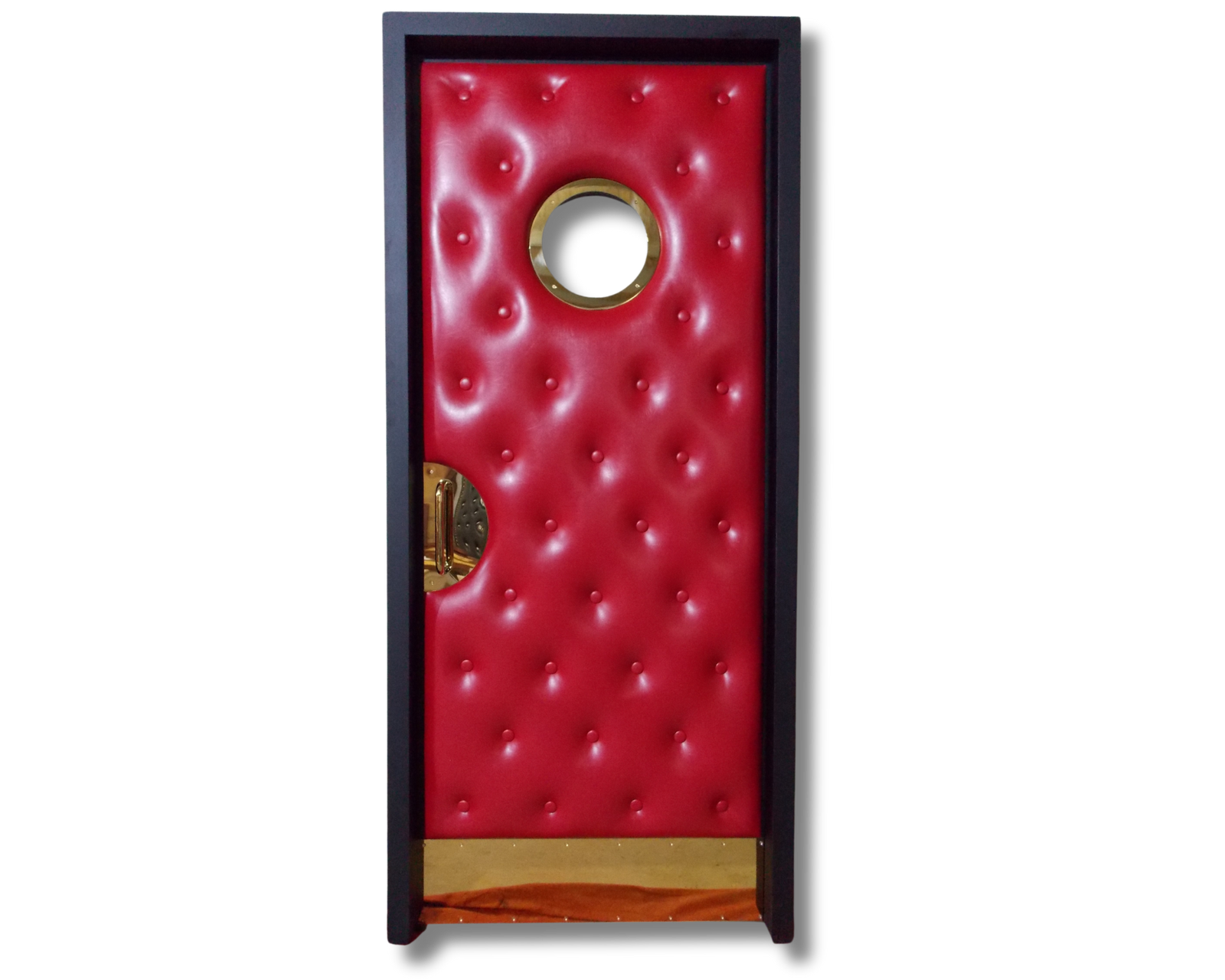
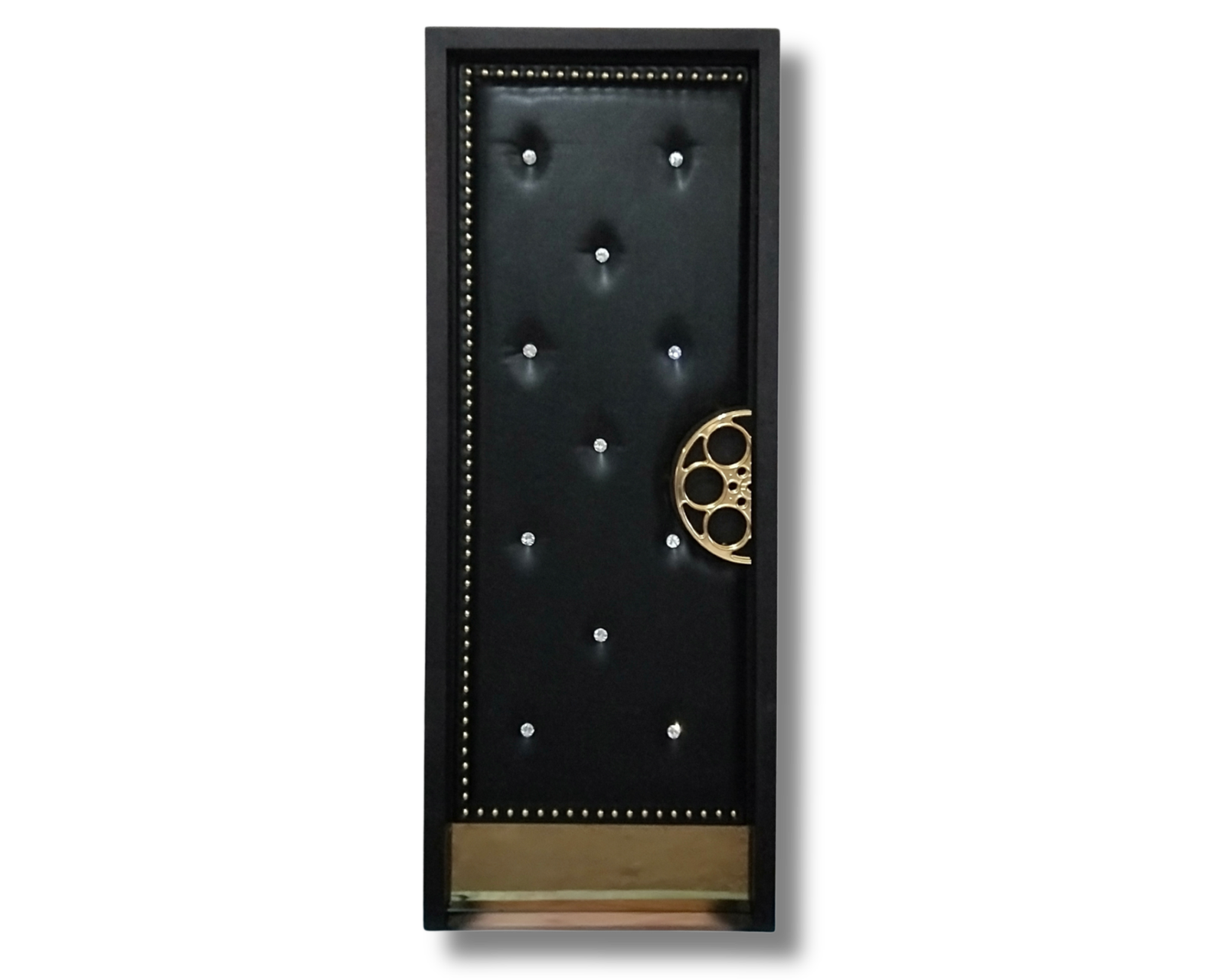
Crafted with meticulous attention to detail, George’s Theater Door is more than just an entrance – it’s a statement. The rich, deep red panels provide superior sound absorption, minimizing distractions and maximizing your audio experience. The modern, curved handle adds a touch of contemporary elegance, while the integrated soundproof threshold and sweep ensure complete acoustic isolation. This is where your cinematic journey begins.
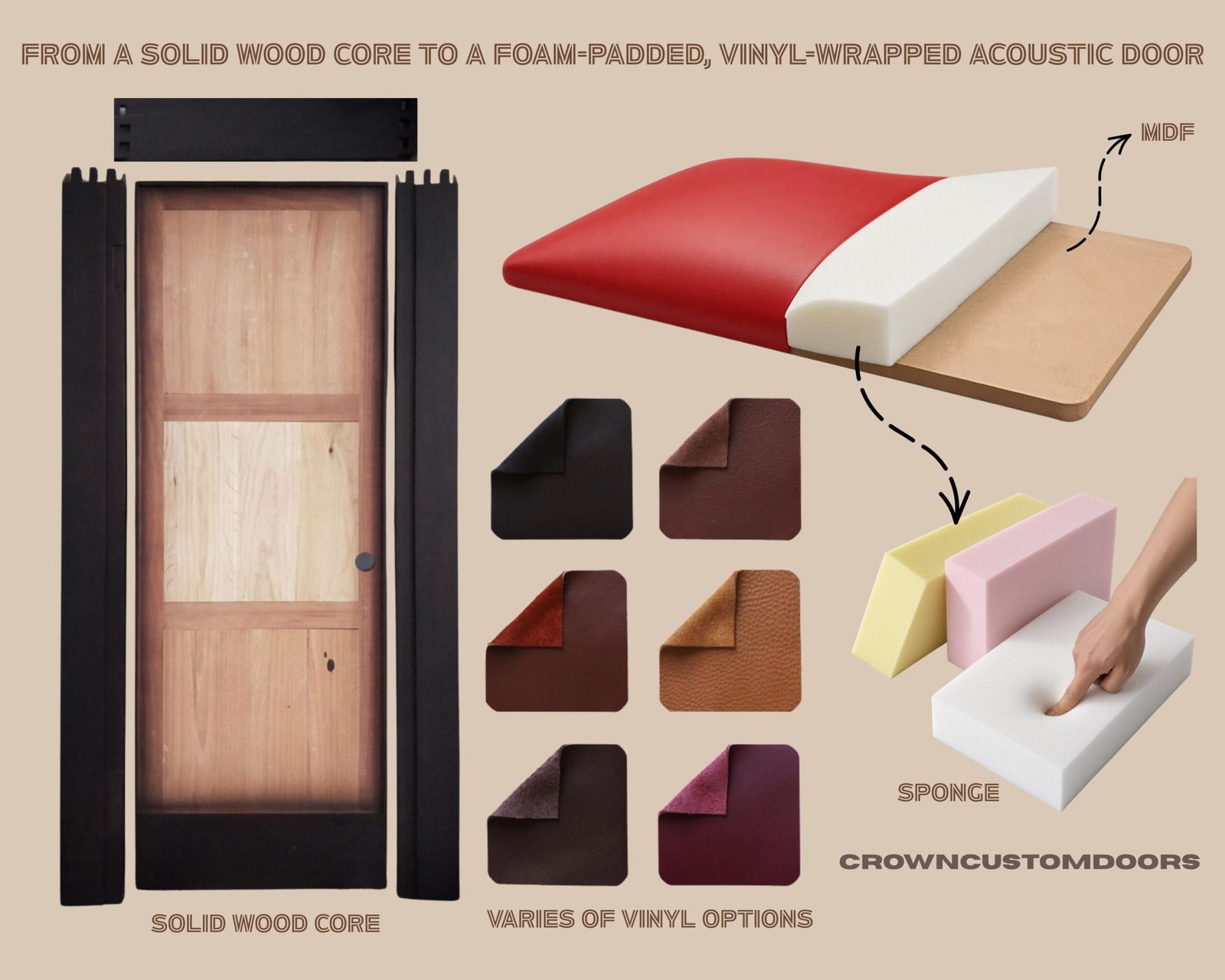
Multi-layer acoustic engineering breakdown showing the solid wood door core, MDF substrate, high-density sound-damping foam padding, and customizable vinyl finish options.
Solid Mahogany Core with Mortise-and-Tenon Joinery
The door begins as a solid mahogany core, not a hollow or lightweight filler panel.
The stiles, rails, and panels are made from solid mahogany.
The frame is assembled with traditional mortise-and-tenon joinery.
This construction keeps the door rigid, dimensionally stable, and resistant to warping.
A dense, well-joined hardwood core also improves sound isolation, which is essential for a home theater.
After joinery, the core is stained and finished. At this point the door is structurally complete. The dark frame parts around the slab are prepared and ready. The next step is not more woodwork. It is upholstery installation.This is the stage shown in the first photo: stained, stable, and waiting for the padded face to be attached.
Acoustic Upholstery and Hardware Installation
Once the wood core has been finished, the soft-padded panels are mounted directly to the door.
Three padded sections are applied over the core to create the theater look and add a second acoustic layer.
The upholstery is fitted so the padded face sits cleanly inside the finished frame.
After the padded panels are secured, the selected hardware is installed, including the curved ladder pull handles.
Why This Production Sequence Matters
We finish the solid-wood core first, then add upholstery. That order is intentional.
The mahogany core carries the structural load and provides the main acoustic mass.
Mortise-and-tenon joinery keeps the door square so the padded panels sit flush.
Staining and sealing the wood before upholstery protects the core and prevents later movement from affecting the padded face.
Hardware is installed last so handle placement, alignment, and operation can be checked on the finished door.
The result is a home theater door that is structurally strong, visually clean, and better suited to sound control than a lightweight decorative door.
Key Specifications Clients Usually Ask About
Core material: solid mahogany
Joinery: mortise and tenon
Purpose: home theater / media room acoustic door
Face: custom upholstered panels
Finish sequence: wood core stained and sealed first, then padded panels and hardware
Benefit: stability, durability, and improved sound isolation
What Buyers Should Look For
When comparing home theater doors, look past the fabric color. Ask whether the core is solid hardwood, whether the frame is mortise-and-tenon rather than stapled or butted, and whether the wood is finished before the upholstery is installed. Those details determine how the door will look, close, and perform after years of use.
Features:
Plush, Sound-Dampening Red Panels: For optimal acoustic performance.
Sleek, Modern Handle: A touch of contemporary design.
Soundproof Drop-down Seal & Threshold : Complete noise isolation.
Customizable Options Available: Tailor the door to your specific needs.
Specifications:
Dimension: 37″ x 81-1/2″
Wood Species: Mahogany
Stainless Steel Curved Ladder Pulls
Vinyl Color: Dark Red HLA-28-23
Stain Color: Matte Black
Soundproof Automatic Door Bottom
Lead Time: 35 Days
Built Year: 2021
Start Your Cinematic Journey Today.
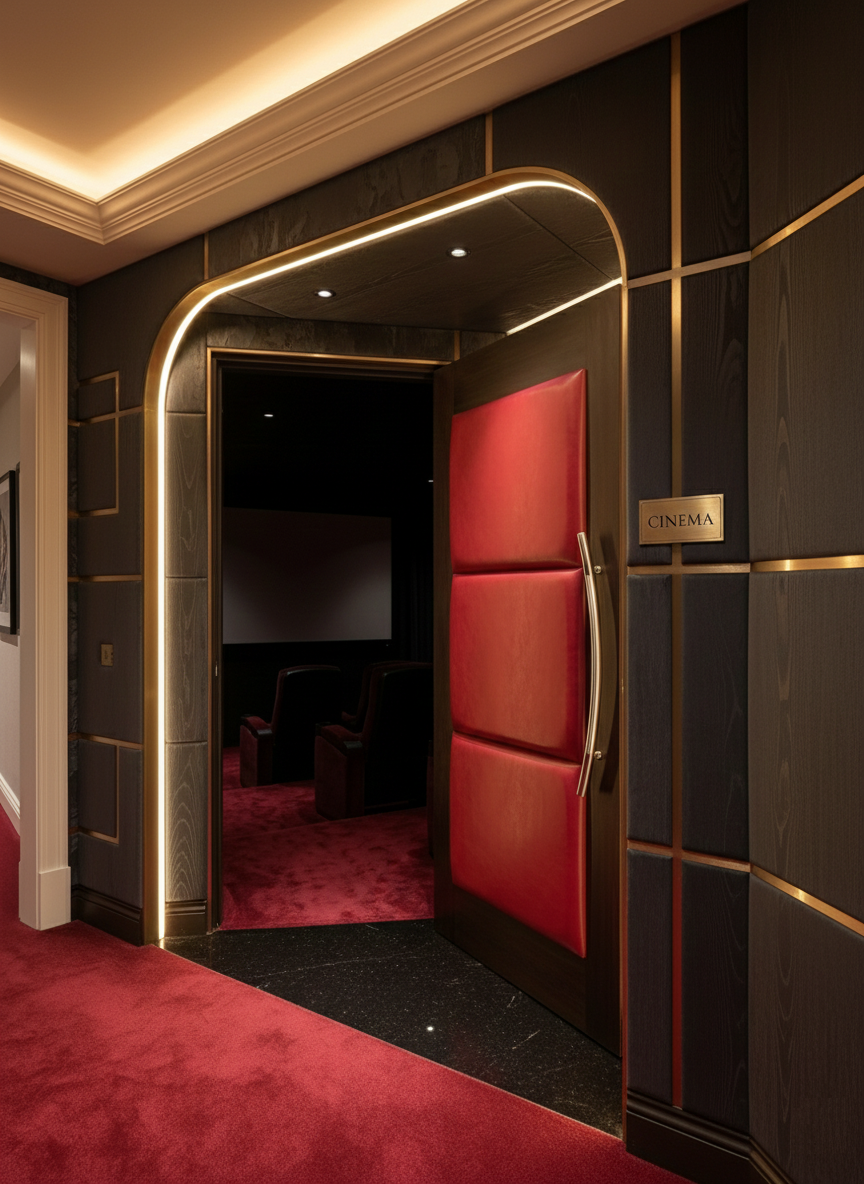
Deep red padded panels, solid construction, and dramatic lighting — designed to feel like entering a private cinema, not just a room.
Get Started Now
Ready to elevate your home theater with a custom 3-panel upholstered door? Contact us today for a free consultation and quote, and let’s bring your vision to life!